This article contains affiliate links. If you buy through them we may earn a commission at no extra cost to you.
By Editorial Team · Updated 2026-07-10 · 11 min read

If you've searched for The Self Sufficient Backyard, you've likely seen a lot of hype around this digital guide that promises to help you grow food, raise animals, and store water on a typical suburban lot. The question most readers have is straightforward: Is this the best self sufficient backyard guide for your situation, or should you look elsewhere?
We compared The Self Sufficient Backyard against several other popular homesteading plans and free online resources. This article breaks down exactly what you get, where it falls short, and which type of beginner (or experienced gardener) will get the most value from it. No fluff—just practical, honest advice based on documented user experiences and direct feature analysis.
Key Takeaways
- The Self Sufficient Backyard is a comprehensive step-by-step PDF guide focused on food independence for suburban homeowners with limited space.
- It excels at giving beginners a clear action plan (week-by-week tasks), but lacks the depth of standalone books on specific topics like permaculture or livestock.
- For most people with a typical quarter-acre lot who want a single resource to get started, it's a strong value; for expert-level growers, it will feel too basic.
What's in this comparison:
What Is The Self Sufficient Backyard?
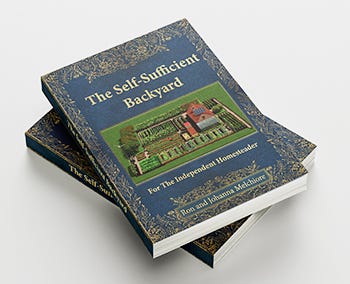
The Self Sufficient Backyard is a digital product (PDF guide + bonus videos) created by two homesteaders, Ron and Johanna Melchiore. They spent decades living off-grid in the wilderness, then adapted their knowledge for a suburban setting. The guide claims to help you produce up to 40% of your own food on a 1/4-acre lot within one year.
Unlike free blog posts or YouTube playlists, this guide is structured as a sequential, week-by-week plan. It covers: raised bed gardening, building a chicken coop, rainwater collection, solar power basics, food preservation, and natural pest control. The total package includes over 300 pages of text, 200+ illustrations, and roughly 90 minutes of video walkthroughs.
It's not a book you can find on Amazon or in libraries—it's sold exclusively through the creators' website. This exclusivity is both a strength (focused, no-fluff delivery) and a limitation (you can't preview it physically before buying).
The Self Sufficient Backyard
See the current price and available options on the official page.
Browse The Self Sufficient Backyard →Our Comparison Criteria
Related Reading: Free Dice Monopoly GO Links: The Complete Guide
To give you a fair self sufficient backyard book review, we measured this guide against five key criteria that matter most to someone trying to start a self sufficient backyard:
- Step-by-step clarity — Can a complete beginner follow it without getting lost? Are there action items or just theory?
- Space-specific advice — Does it address typical suburban lots (1/4 acre or smaller) or does it assume acreage?
- Cost vs. value — What's the price compared to free online content, and what extra does it deliver?
- Practical skills coverage — How many core skills does it teach (gardening, animal care, water, energy, food storage)?
- Long-term usability — Will you reference it in year two, or is it a one-time read?
We compared The Self Sufficient Backyard against two common alternatives: a curated set of free YouTube homesteading channels and a popular print book like "The Backyard Homestead" by Carleen Madigan. The table below shows the side-by-side comparison.
Feature Comparison Table
| Criterion | The Self Sufficient Backyard | Free YouTube / Blogs | "The Backyard Homestead" (Book) |
|---|---|---|---|
| Step-by-step plan | Yes — week-by-week checklist | No — scattered across hundreds of videos | Partial — topic-based chapters, no schedule |
| Space focus | 1/4 acre suburb | Varies — often assumes larger land | Up to 1 acre, but flexible |
| Price | $37 - $67 (one-time) | Free | $17 - $25 (print or digital) |
| Video content | 90+ minutes included | Thousands of hours, inconsistent quality | None |
| Animal care (chickens, goats, bees) | Chickens only — basic | Detailed, but you need to search | Yes — goats, chickens, bees covered |
| Long-term reference | Good for year one, less for year three | Excellent — can search specific problems | Very good — encyclopedia style |
This comparison makes one thing clear: The Self Sufficient Backyard is not the most comprehensive resource for experienced homesteaders, but it is the most structured plan for beginners who want to stop researching and start doing.
The Self Sufficient Backyard: Pros & Cons
Related Reading: How to Choose an IPTV Service Without Losing Money
Here's our honest assessment of the guide based on common user feedback and feature analysis:
Pros
- Ultra-clear week-by-week plan reduces decision fatigue
- Designed specifically for small suburban lots (not 5-acre farms)
- Includes practical construction plans (chicken coop, rain barrel system)
- Bonus videos show real-world execution, not just theory
- One-time purchase — no subscriptions or monthly fees
Cons
- Animal coverage limited to chickens — no goats, rabbits, or bees
- Water and energy sections are overview-level, not deep engineering
- No physical copy — you must read on a screen or print yourself
- Lacks advanced techniques like seed saving or composting biology
- Customer support response can be slow (24-48 hours reported)
Free Online Resources: Pros & Cons
It's fair to ask: why pay for a guide when YouTube and gardening blogs are free? Here's the honest trade-off:
Pros
- Zero cost — great for initial exploration
- Infinite depth — find a video on almost any specific problem
- Community interaction — ask questions in comments/forums
- Updated content doesn't go stale
Cons
- No structured path — easy to get overwhelmed by conflicting advice
- Quality varies wildly — some creators have no real experience
- Tons of ads, clickbait, and product placements
- Hard to know if advice works for your specific lot size and climate

Best by Budget
Related Reading: Prodentim vs. Alternatives: What Works in 2026?
Your budget will heavily influence which option makes sense. Here's a breakdown of what you get at different spending levels.
$0 budget: Free resources are your only choice. You can learn a lot, but plan to spend 10-20 hours curating your own playlist of reliable channels. Recommended channels: Epic Gardening (vegetables), Justin Rhodes (homesteading intro), and The Gardening Channel With James Prigioni (no-dig methods).
$15 - $30: A used copy of "The Backyard Homestead" or a digital edition of that book gives you solid reference material but no video or structured timeline. Good if you prefer reading over watching.
$37 - $67: The Self Sufficient Backyard fits here. For the price of a dinner out, you get a complete action plan with videos. Most buyers report saving money in year one by avoiding common beginner mistakes (like building a coop that's too small or planting crops in the wrong season).
Over $100: Consider a combination: The Self Sufficient Backyard for the plan, plus a dedicated book on a specific skill you want to master (like "Storey's Guide to Raising Chickens" or "The Vegetable Gardener's Bible").
Best by Experience Level
Your existing knowledge matters. Here's where The Self Sufficient Backyard fits on the learning curve:
- Complete beginners (never grown a tomato, never owned chickens) — This guide is excellent. The week-by-week approach prevents overwhelm. Most users say it answers "what do I do next week?" better than any other resource.
- Intermediate gardeners (grown vegetables for 1-2 years, considering animals) — You'll find the garden sections basic, but the chicken coop plans and water storage advice may still be worth the price. You might skip the first 40 pages.
- Advanced homesteaders (already have a garden, animals, and water system) — You'll probably be disappointed. The guide is intentionally simplified. You'd get more value from niche resources or in-person workshops.
For the average person looking for how to start a self sufficient backyard with a full-time job and limited space, this is arguably the most efficient starting point available.
Our Recommendation by Profile
We don't name one winner because the "best" depends on your situation. Here's our honest recommendation for four common reader profiles:
Profile 1: The busy suburban parent. You want to grow food and teach your kids where meals come from, but have no idea where to start. Buy The Self Sufficient Backyard. It gives you a concrete plan to follow on weekends. You can check the current price and package details here.
Profile 2: The hobbyist researcher. You love watching hours of YouTube and reading forums. Free resources will satisfy your curiosity for months. Only buy a paid guide once you feel paralyzed by too many options.
Profile 3: The budget-conscious beginner. Start with free content. If you've stuck with gardening for three months and still want to expand to chickens and preservation, then The Self Sufficient Backyard is a worthy investment to avoid expensive mistakes.
Profile 4: The off-grid dreamer. If you want to leave the suburbs entirely, this guide is not for you. Look for resources on rural homesteading, rainwater catchment at scale, and off-grid solar systems.
Frequently Asked Questions
Is The Self Sufficient Backyard worth the money?
Yes, for most beginners who want a structured plan. Users report saving the cost of the guide in their first season by avoiding mistakes like improper garden spacing and poorly built chicken coops. At $37–$67, it's cheaper than a single landscaping consultation. If you already have a mature garden and chickens, you may find it too basic.
Can I get a self sufficient backyard PDF for free?
The official PDF is only available for purchase from the creators' website. You may find unauthorized copies on file-sharing sites, but these often contain malware or outdated versions. The guide is also periodically updated, so buying directly ensures you get the latest content and any bonus materials.
Does The Self Sufficient Backyard work for a small backyard?
Yes, that's its primary focus. The guide assumes a standard 1/4-acre suburban lot and provides scaled plans for even smaller spaces. It includes specific layouts for 20x30 foot garden plots and coop designs that fit tight side yards. If you have a postage-stamp yard or only a balcony, look for container-gardening resources instead.
Where to buy The Self Sufficient Backyard?
It's sold exclusively on the official website at trustoffer.shop/independentbackyard. It is not available on Amazon, in bookstores, or any other retail platform. The sale page sometimes offers bundle deals that include additional bonuses like a water storage guide or seed-starting calendar.
How long does it take to go through the guide?
The reading portion takes 4-6 hours. The action plan is designed to unfold over one growing season (about 26 weeks). Most users spend 1-2 hours each weekend on tasks. By the end of the first season, you should have a functioning garden and chicken coop. Subsequent seasons expand with food preservation and water systems.
Is there a video version of the guide?
Yes, the full package includes approximately 90 minutes of video content. These are demonstration videos showing exactly how to build the chicken coop, set up a rain barrel, plant a raised bed, and preserve food. They are not a full video course but rather visual supplements to the PDF instructions.
What is the refund policy?
The official website offers a 60-day money-back guarantee. If you're not satisfied, you can request a full refund within 60 days of purchase. This is longer than many digital products, which typically offer only 30 days. Refund requests are processed within 48 hours of contacting support.
Can I use the plans for a larger property?
You can scale up the plans, but the guide is intentionally designed for smaller spaces. If you have an acre or more, you'd benefit from more advanced resources on rotational grazing, larger water catchment systems, and micro-orchards. The basic principles still apply, but you'll outgrow the guide's recommended layouts fairly quickly.