By Analyst Team · Updated 2026-07-17 · 12 min read
You have probably heard the term IPTV thrown around in conversations about cord-cutting and modern television. But how does IPTV work exactly? Is it the same as Netflix or YouTube? Can it replace your expensive cable subscription? In this complete guide, we will walk through every layer of Internet Protocol Television, from the technical backbone to the practical setup steps you can follow today.
Unlike traditional broadcast methods that send signals through satellite dishes or coaxial cables to your home, IPTV delivers television content over your internet connection. The difference might sound simple, but the implications are enormous. You gain flexibility, often drastically lower costs, and access to channels from around the world. Let us strip away the jargon and show you exactly what happens from the moment you press play to the moment the picture appears on your screen.
LIMITED TIME AVAILABILITY
Unlock Full how does iptv work Access
Secure special promotional rates instantly before the window closes. Lock in your pricing model today before plans return to standard regional metrics.
What Is IPTV Exactly?
IPTV stands for Internet Protocol Television. Unlike traditional television that relies on satellite signals, cable infrastructure, or over-the-air broadcast waves, IPTV uses your internet connection to deliver video content. Instead of broadcasting all channels simultaneously and receiving the ones you pay for, IPTV sends only the channel you request directly to your device.
This is a fundamental shift in how television works. Think of it like the difference between a library full of books (traditional TV) and a librarian who brings you exactly the book you want, when you want it (IPTV). The most common related entities include live TV streaming, video on demand (VOD), time-shifted media (catch-up TV), and Electronic Program Guides (EPG). Each of these components works together to create the seamless viewing experience that makes how does IPTV work such a compelling question to answer.
How Does IPTV Work Step by Step
Now let us walk through the exact technical process. Understanding this will help you troubleshoot issues and appreciate why IPTV behaves differently from cable television.
Step 1: Content Acquisition and Encoding
The journey begins at the source. IPTV providers acquire television signals from satellite feeds, cable headends, or direct broadcaster agreements. These raw video signals are then encoded into a digital format. The most common codecs today are H.264 and the newer H.265 (HEVC), which compress the video to reduce bandwidth consumption while maintaining high picture quality. High-end services supporting 4K content typically use H.265 for its superior compression efficiency.
Step 2: Streaming Protocol Selection
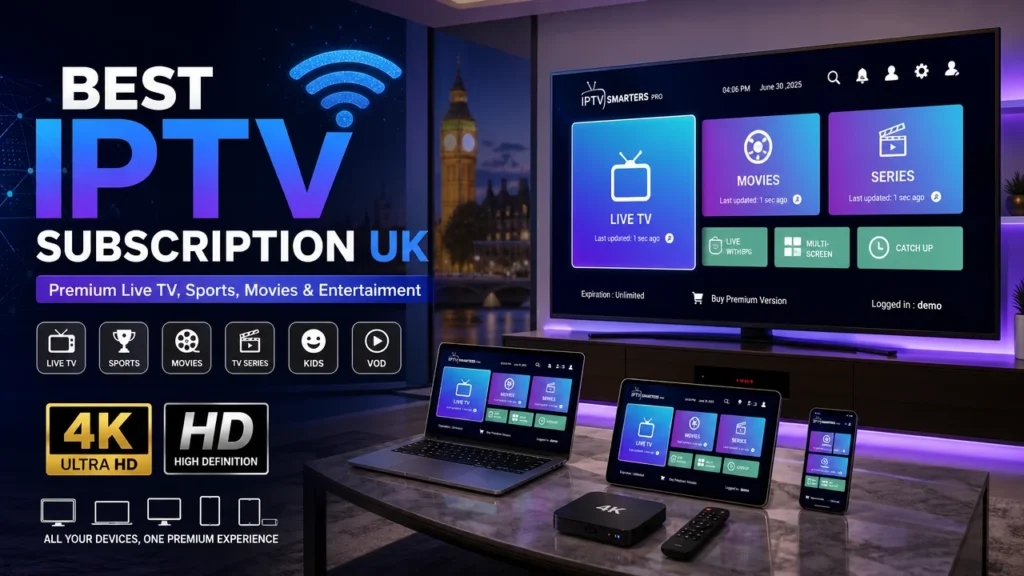
Once encoded, the video stream needs a delivery method. IPTV providers use specialized streaming protocols designed for live television. The most common are HLS (HTTP Live Streaming) and MPEG-DASH. HLS, originally developed by Apple, breaks the video into small chunks, typically 2 to 10 seconds long. Your device downloads these chunks sequentially, creating a continuous stream. MPEG-DASH works similarly but offers more adaptive bitrate options. The image below shows how these chunks are organized and delivered to your screen.
Step 3: Content Delivery Network Routing
A reliable IPTV service routes traffic through a Content Delivery Network (CDN). CDNs consist of geographically distributed servers that cache video content closer to your physical location. When you select a channel, your device connects to the nearest CDN edge server rather than a central server located potentially thousands of miles away. This dramatically reduces latency, minimizes buffering, and ensures stable playback. This is why reputable providers invest heavily in CDN infrastructure while cheaper alternatives often suffer from buffering issues.
Step 4: Your Device Decodes and Displays
Your device, whether it is a smart TV, Firestick, Android box, or smartphone, receives the chunked video data and reassembles it through a media player. Apps like TiviMate, IPTV Smarters, or GSE Smart IPTV handle the decoding process. They use the device hardware to decompress the video stream in real time, sync the audio, and render the picture on your screen. The entire process happens in under a second, creating the illusion of live broadcast television.
Concrete Benefits for Users
Understanding how does IPTV work is useful, but the real question is what you actually gain. Here are the most significant advantages real users experience:
- Cost savings: IPTV subscriptions typically cost 70-80% less than traditional cable packages. Average monthly pricing ranges from $10 to $30 compared to $100+ for cable.
- Multi-device access: Watch on your smart TV, laptop, tablet, or phone simultaneously without additional hardware rentals.
- Global channel selection: Access channels from the United States, United Kingdom, Canada, India, Latin America, and beyond from a single subscription.
- Video on demand libraries: Many IPTV providers include extensive VOD catalogs with movies, TV series, and documentaries available on demand.
- No contracts: Most IPTV services operate on a monthly or quarterly basis with no long-term commitment. Cancel anytime.
Unlock complete high-definition information and priority access packs.
Claim This Special Offer for how does iptv work →Honest Limitations You Should Know
No technology is perfect, and IPTV comes with real drawbacks that honest guides acknowledge. Here is what you need to consider:
Pros
- Lower monthly cost than cable
- Watch on any device with internet
- Thousands of international channels
- No equipment rental fees (no set-top box needed)
- HD and 4K quality available
- Instant channel switching
Cons
- Requires stable internet (minimum 25 Mbps for HD)
- Legal gray areas in some regions
- Service reliability varies between providers
- Buffering during peak hours on weak services
- Channel downtime can occur without notice
- Customer support quality is inconsistent
IPTV vs Cable: Which Is Better?
The IPTV vs cable which is better debate comes down to your priorities. Below is a direct comparison table to help you decide based on concrete metrics.
| Feature | IPTV | Cable TV |
|---|---|---|
| Average Monthly Cost | $10 – $30 | $80 – $200 |
| Internet Required | Yes, 25+ Mbps | No, coaxial connection |
| Channel Count | 1,000 – 20,000+ | 100 – 500 |
| Video Quality | HD/4K dependent on internet | Consistent HD/4K |
| Device Flexibility | TV, phone, tablet, PC | TV only (rental box) |
| Contract Terms | No contract, month-to-month | 1-2 year contracts typical |
| Reliability | Variable, internet-dependent | Very high uptime |
Who Is IPTV For?
Not everyone is an ideal candidate for IPTV. Here are three user profiles that benefit most from switching from cable:
The Sports Enthusiast: If you follow live sports from multiple leagues, IPTV is a game-changer. The best IPTV service for live sports offers dedicated sports channel packages covering NFL, NBA, Premier League, Champions League, UFC, Formula 1, and more. You get access to international sports networks that are either unavailable or prohibitively expensive on cable. This alone justifies the subscription cost for many sports fans.
The Cord-Cutter on a Budget: Families looking to reduce monthly expenses without losing access to popular entertainment channels find massive savings with IPTV. Replacing a $150 cable bill with a $25 IPTV subscription saves over $1,400 annually.
The International Viewer: Expatriates and multilingual households benefit greatly from IPTV global channel offerings. Watch news, entertainment, and sports from your home country while living abroad. Most services provide country-specific packages for India, the Middle East, Latin America, Europe, and Africa.
How to Get Started: Practical Setup Guide
If you want to understand how does IPTV work on smart TV and actually set it up yourself, follow these numbered steps. The process works similarly for Firestick, Android TV, and other streaming devices.
- Check your internet speed: Run a speed test. You need at least 25 Mbps for stable HD streaming and 50 Mbps for 4K content. Use a wired Ethernet connection if possible for the most reliable experience.
- Choose a reputable IPTV provider: Look for providers with positive IPTV review Reddit 2025 threads. Check for free trial availability, CDN infrastructure, payment options, and channel selection. Avoid providers that only accept cryptocurrency with no trial period.
- Purchase a subscription: Once you select a provider, choose a plan. Start month-to-month rather than committing to an annual plan. This minimizes risk if the service quality does not meet your expectations.
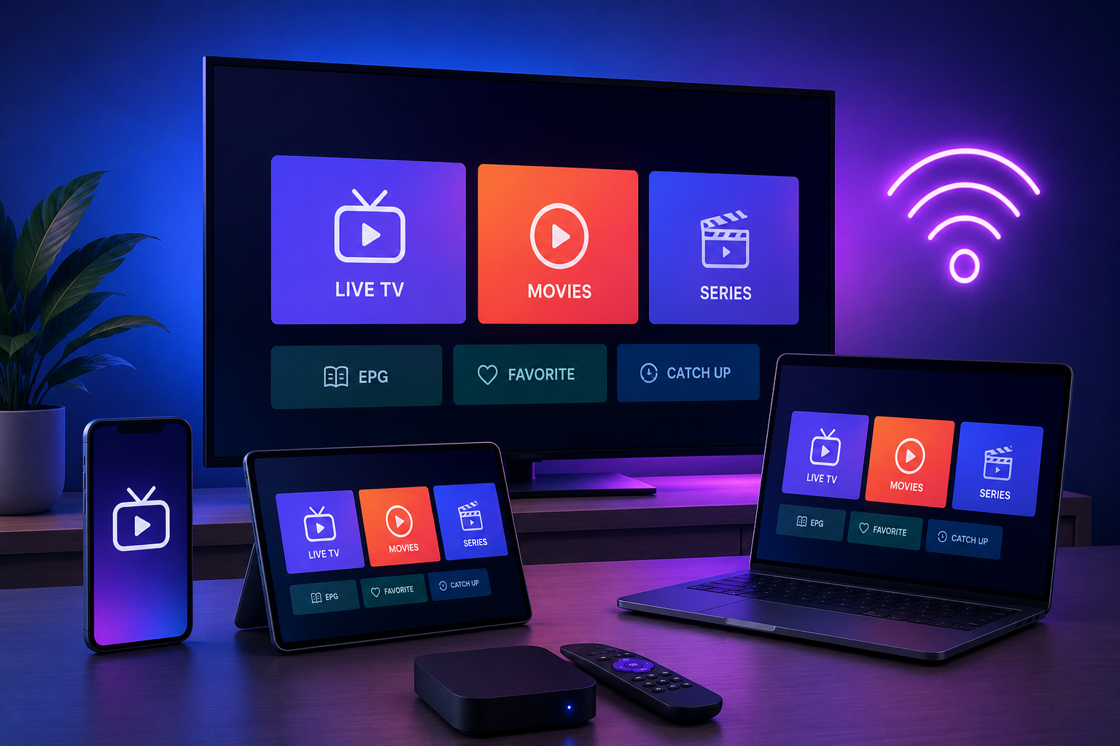
- Install an IPTV player app: For Firestick, install TiviMate or IPTV Smarters Pro from the Amazon App Store. For smart TVs, install Smart IPTV or SS IPTV from your TV app store. The image below shows the IPTV Smarters setup interface.
- Enter your subscription details: Open the app and enter the playlist URL (M3U link) provided by your IPTV service. Some services also require a username, password, and portal URL. Your provider will send these details after payment.
- Configure the EPG: Electronic Program Guide (EPG) provides TV schedules. Enter the EPG URL from your provider. This enables the grid-style channel guide you see in cable TV.
- Test and troubleshoot: If you experience buffering, try switching to a wired connection, lowering the video quality in the app settings, or using a VPN. Many IPTV buffering issues are location-related, so a VPN to a nearby server can help significantly.
- Optimize your viewing: Create a favorites list of channels you watch regularly. Adjust video player settings to use hardware decoding for smoother playback. Set recording schedules if your provider supports cloud recording features.
Regarding how to set up IPTV on Firestick specifically: Navigate to Settings > My Fire TV > Developer Options > Apps from Unknown Sources > Turn On. Then download the Downloader app, enter the URL for your IPTV app, and install. The process takes about 10 minutes total.
Final Subscription Window:
Main Offer Today →Affiliate Disclosure: Clicking this secure link verified by our network supports our team through standard partnership terms at zero extra cost to your invoice.
Frequently Asked Questions
Is IPTV legal in the US?
The legality of IPTV depends entirely on the content provider, not the technology itself. Is IPTV legal in the US comes down to licensing. Legitimate IPTV services like Hulu Live, YouTube TV, and Sling TV operate with proper broadcast licensing. Unlicensed services that offer premium channels for suspiciously low prices operate in a legal gray area and may violate copyright laws. As a consumer, using licensed services is always safe. If you are unsure about a provider, check if they have a registered business entity and transparent content sourcing.
Do I need a VPN for IPTV?
A VPN is not strictly required for IPTV, but it is highly recommended in several scenarios. If your internet service provider throttles streaming traffic (which some ISPs do), a VPN encrypts your connection and prevents throttling. Additionally, if you travel internationally, a VPN helps you access content from your home country. Many users find that using a VPN significantly reduces buffering issues. Choose a VPN with fast servers and a no-logging policy for the best experience.
What internet speed do I need for IPTV?
For standard definition channels, 5 Mbps is sufficient. For HD streaming, you need a minimum of 25 Mbps. For 4K content, 50 Mbps is recommended. These numbers assume that your internet connection is stable and not shared with heavy users during streaming. If multiple family members stream simultaneously, add 15 Mbps per additional stream. Wired Ethernet connections always perform better than Wi-Fi, especially in homes with thick walls or interference from neighboring networks.
What is the best IPTV service for live sports?
The best IPTV service for live sports depends on which leagues you follow. The most reliable providers offer dedicated sports packages with channels like ESPN, Sky Sports, beIN Sports, DAZN, and regional sports networks. Look for services that advertise low latency (under 30 seconds from live action) and have CDN servers near your location for the best performance. Read current reviews on Reddit forums to see which providers maintain stable sports streams during peak game times, as even good services can struggle during major events like the Super Bowl or Champions League final.
Where can I buy a reliable IPTV subscription?
When asking where to buy reliable IPTV subscription, prioritize providers that offer free trials, accept PayPal or credit cards (offering buyer protection), have active Discord or Telegram communities, and provide clear pricing without hidden fees. Check third-party review sites and avoid providers that require annual commitments upfront. A good starting point is to search for "IPTV reviews 2025 Reddit" and look for providers with multiple positive testimonials over several months. Always test with a trial before purchasing any long-term plan.
How do I fix IPTV buffering issues?
Following an IPTV buffering fix guide can resolve most issues. Start by restarting your router and device. Connect via Ethernet instead of Wi-Fi if possible. In your IPTV app settings, reduce the video buffer size or lower the streaming quality from "Full HD" to "HD" or "SD". Use a VPN to bypass ISP throttling. Clear the app cache in your device settings. If buffering persists, your internet speed may be insufficient, or the provider may have overloaded servers